Spatial comprehension
Rotating, sectioning and exploring an asset makes relationships between components clearer than static views can.
High-fidelity interactive 3D modeling and environment rendering for enterprise presentations and digital twins.
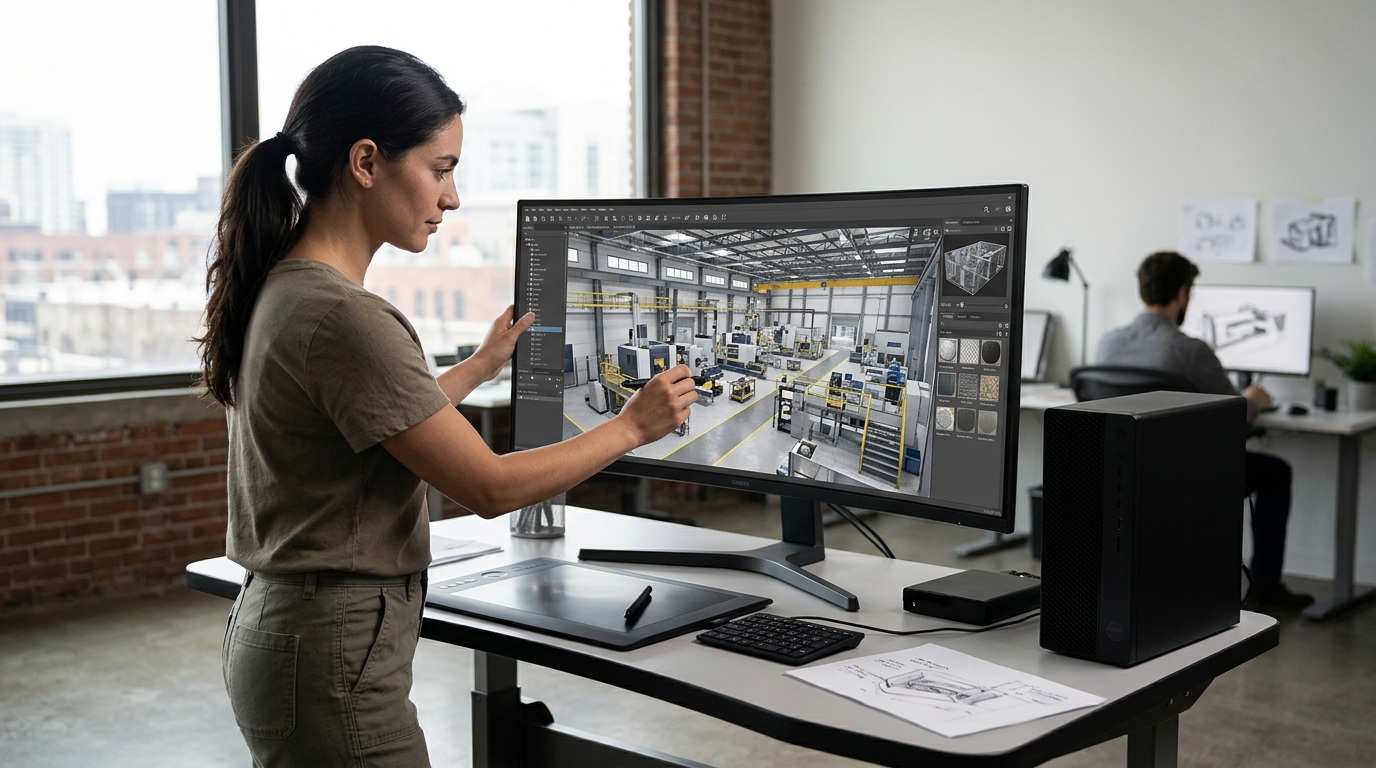
Illustrative industry photo, not a GridNest Inc project.
Drawings and spreadsheets describe an asset; an interactive 3D scene lets people explore it. We model environments, equipment and systems with attention to accurate proportion and material, then add the interactions that help an audience understand how everything fits together.
Rotating, sectioning and exploring an asset makes relationships between components clearer than static views can.
Interactive scenes give executives, partners and teams a shared, intuitive reference point for discussion.
A well-structured scene can become the base for later AR overlays, VR experiences or digital twin interfaces.
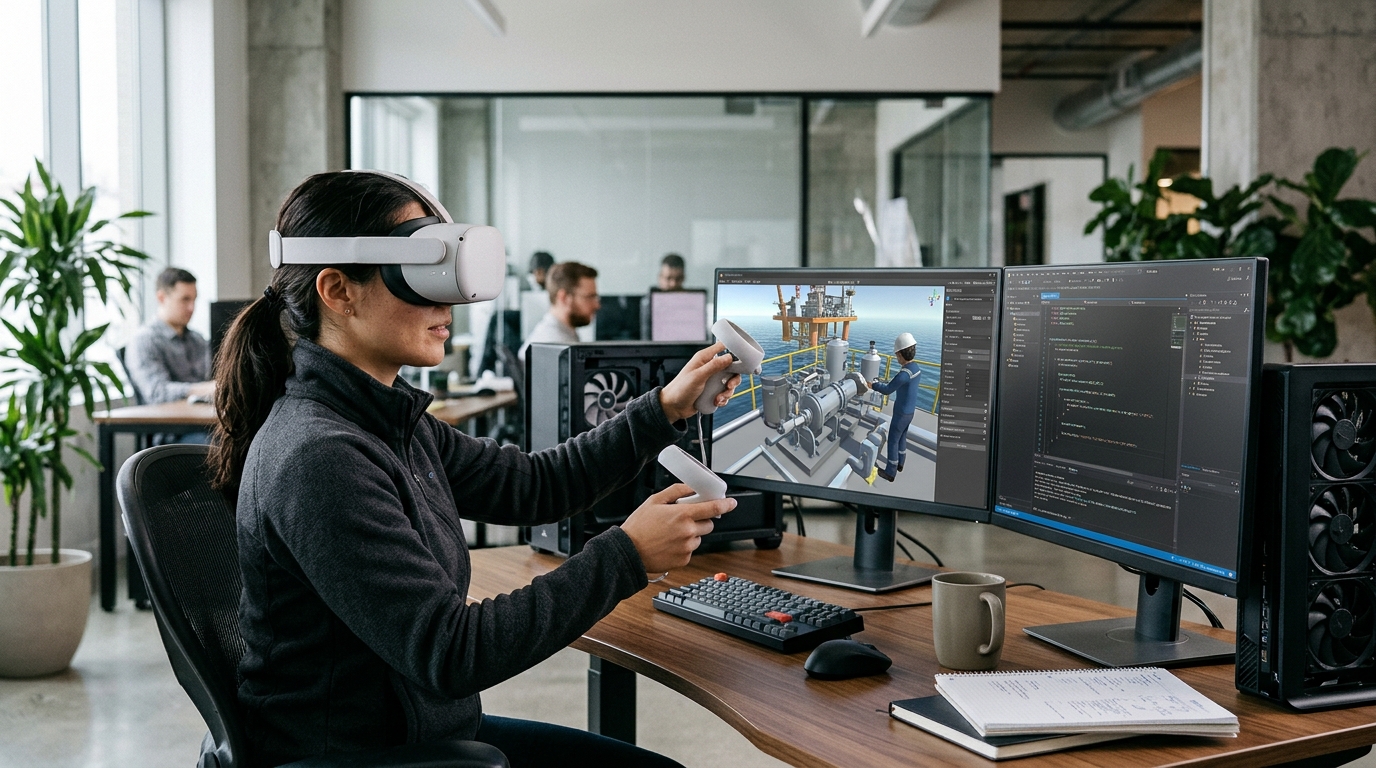
Engineering source data is rarely ready for interactive use. We review what you have, agree on the level of detail the audience actually needs, optimize geometry and materials, and design the viewpoints and interactions around the story the scene should tell. The result is a scene people can explore on their own.
Related: VR Software DevelopmentEnhances spatial comprehension and stakeholder engagement for complex assets.
Engagements generally follow consultation, prototyping, development and deployment. Scope and pace are agreed with you at the start and revisited as the project learns.
Email us a short description of the process or audience, the devices you plan to use and any existing material such as CAD files or procedures. We will reply by email to talk through next steps.